Overview
Help Leadership come up with a value statement that encompasses values learned from prior ideation session with individual contributors. ex: what would maturation of these values within MSO DT in setting expectations of how we value people’s emotional well-being, commitment to fostering depth in relationships across the team, and respect for each other.
Facilitator
InVision Freehand, Google, Microsoft Teams, Microsoft Word
Project Date
September 2022
Challenge
Gaining Insight to strengthen the value statements but also getting a commitment from leadership to uphold and nurture values.
Users
Participants included people leaders within MSO.
The Why
People People are the most important asset to any organization as they are at the heart of everything that happens. What is MSO DT without the many people who work every day to push us all forward? Regardless ofhow good its management, products, or business concepts are, no organization can be productive without a good and committed team. In a previous session with ICs, we explored the emotional connection and sense of belonging to MSO. Here is what we learned: - People want to feel valued and connected. - People feel that MSO wants them to feel pride and confidence - People want to feel respect, alignment and depth in their work relationships - Some either currently feel, or want to avoid feeling isolated
Organization While people are at the core of MSO, the organization can be thought of as the “architecture” that influences how we all interact with each other. Cultivating an organization that values and prioritizes people’s experiences can help MSO DT thrive. If everyone believes in the same values, bonds are created that lead to more positive interactions, and a workplace environment where people motivate each other and are more deeply connected to what the organization truly represents.
Culture… is a collection of attitudes, beliefs, behaviors, values, goals and work practices that make up the regular atmosphere in a work environment. Culture is highly influenced by the character of those that organically build it, but also by the structure of the organization where it happens. A great company culture can keep people productive and help with retention.
People + Organization + Culture = the Workplace Environment
The workplace environment… Significantly influences how employees feel at work. You can think of it as the holistic experience of the people, their work culture, and the structure where that culture thrives. - It’s what makes people enjoy coming to work and feel comfortable - It’s how we do things rather than the things we do. - It influences people’s psychological well-being - It’s made up of space, time, work methodology, and interpersonal relationships characteristics such as friendliness, collaboration, trust, and empathy. A bad workplace environment produces stress and demotivation, relationships that are more tense and less meaningful, and it can potentially drive people away.
Importance of Participation for Leaders Leadership possesses the authority and obligation to influence the atmosphere within the workplace, ultimately affecting the quality of work. However, since they lack a centralized physical presence, language becomes an invaluable tool for shaping the cultural “space.” To facilitate positive change, it is essential to establish a conceptual framework that serves as a reference point for everyone. This framework should align with the individuals, the organization, and the desired culture, thereby establishing expectations regarding the importance placed on emotional well-being, cultivating meaningful relationships within the team, and fostering mutual respect.
We built upon the information gathered from individual contributors (ICs) regarding their needs for improved effectiveness, both emotionally and in their work. This session marked another stride towards developing value statement outputs that encompassed the human aspect, with leadership’s dedication to establishing, sustaining, and evolving a workplace environment that would generate greater employee satisfaction, foster the desired culture, and strengthen the organization.
Desired Outcome of Session - Leadership feels comfortable discussing the emotional and environmental needs of their team - Leadership understands how those needs impact business and its structure. - Participants generate language, defining values at the intersection of IC and Business interests. - Leadership recognizes their own current role in shaping their team’s workplace environment. - Leadership is accountable to support and drive the values on their team.
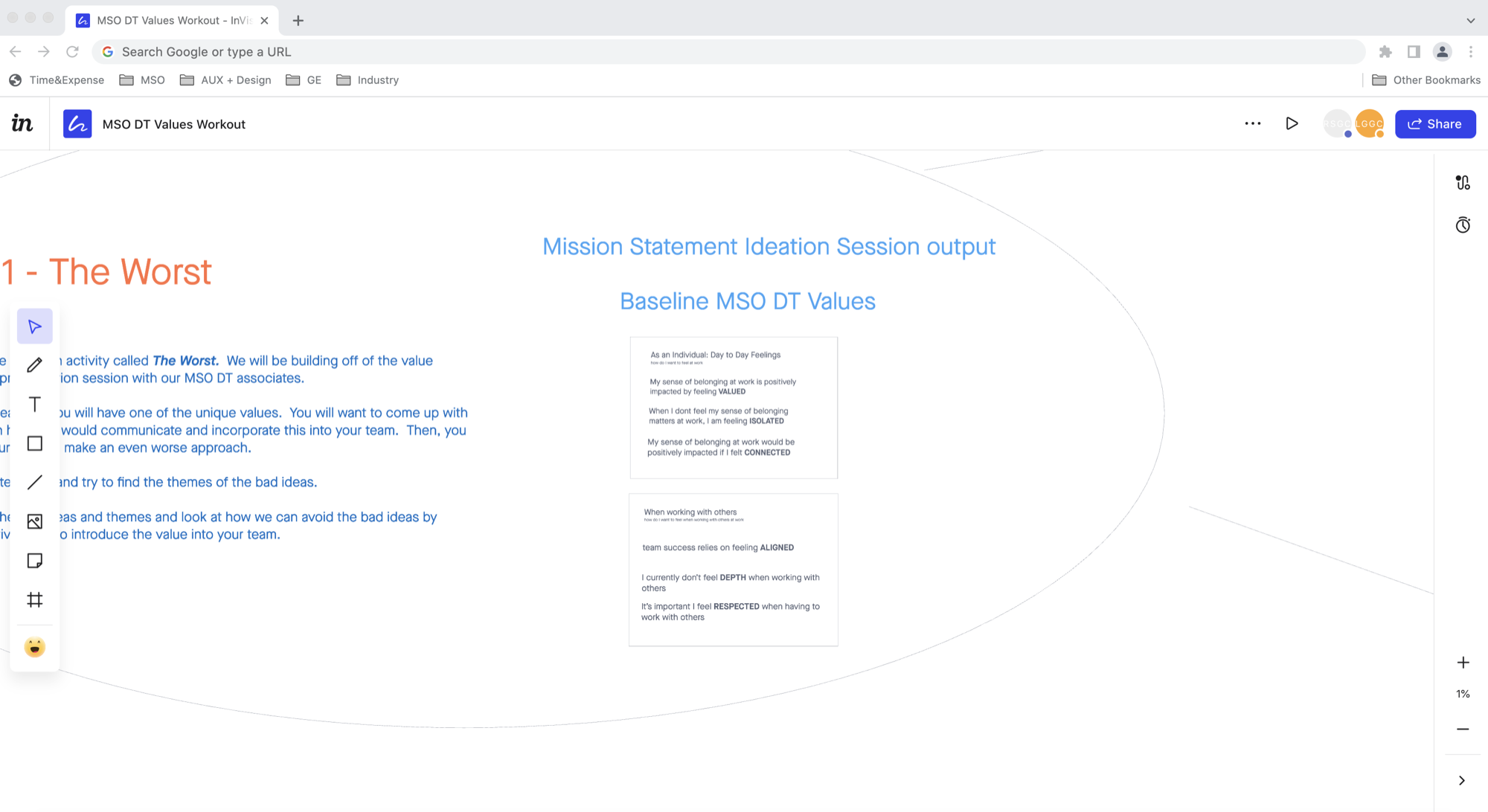
Activity 1 As a warm-up, the group participated in an activity called The Worst. We built off the value statements from the previous ideation session with our MSO DT associates.
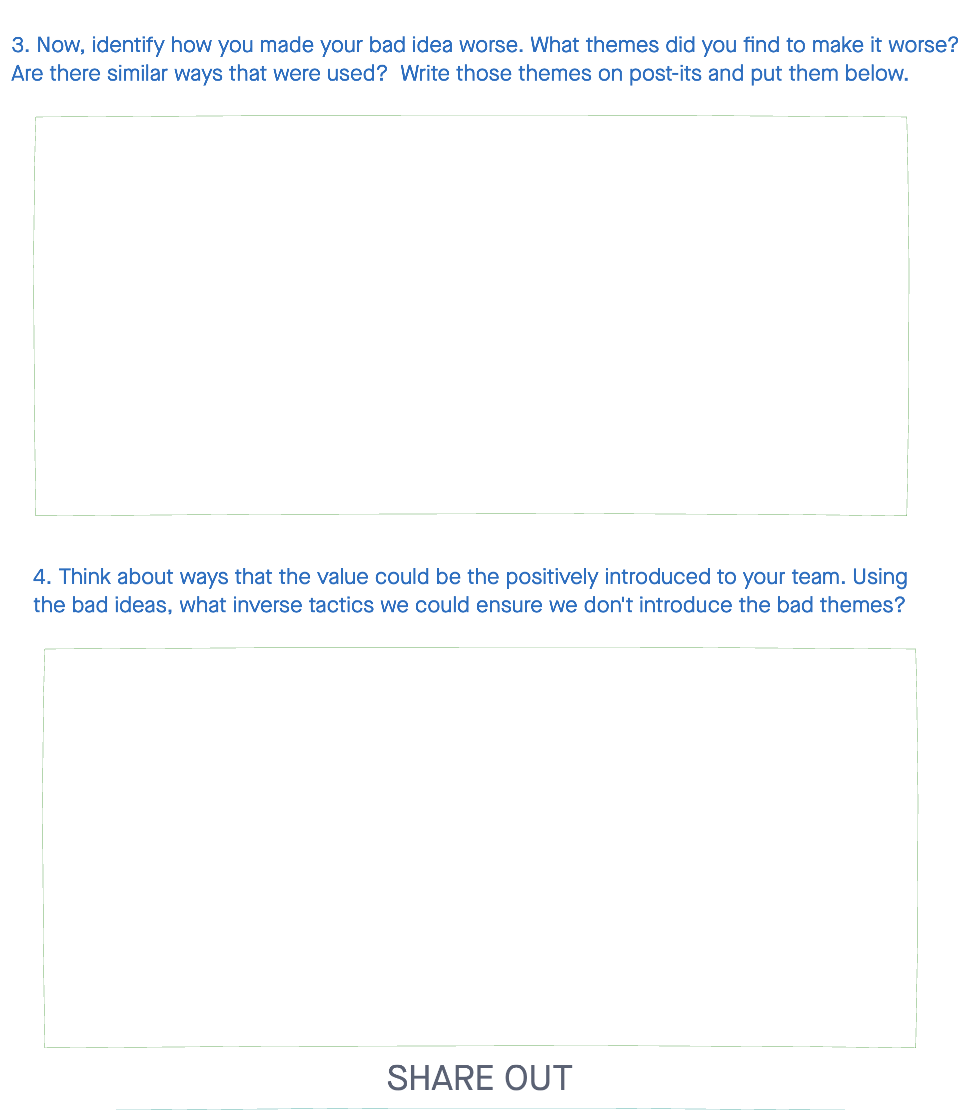
During this exercise, each participant utilized one of the distinct values and generated several poor ideas on how to communicate and integrate it within their team. They proceeded to take it a step further and devised even worse approaches. Subsequently, participants took a step back to identify the underlying themes among the bad ideas.
Lastly, participants examined the bad ideas and themes to explore positive approaches to introduce the value into their team, thereby avoiding the pitfalls identified during the exercise.
Activity 2
We opened up the values to everyone.Taking the good themes and tactics, how do we begin incorporating our value statements within MSO DT?
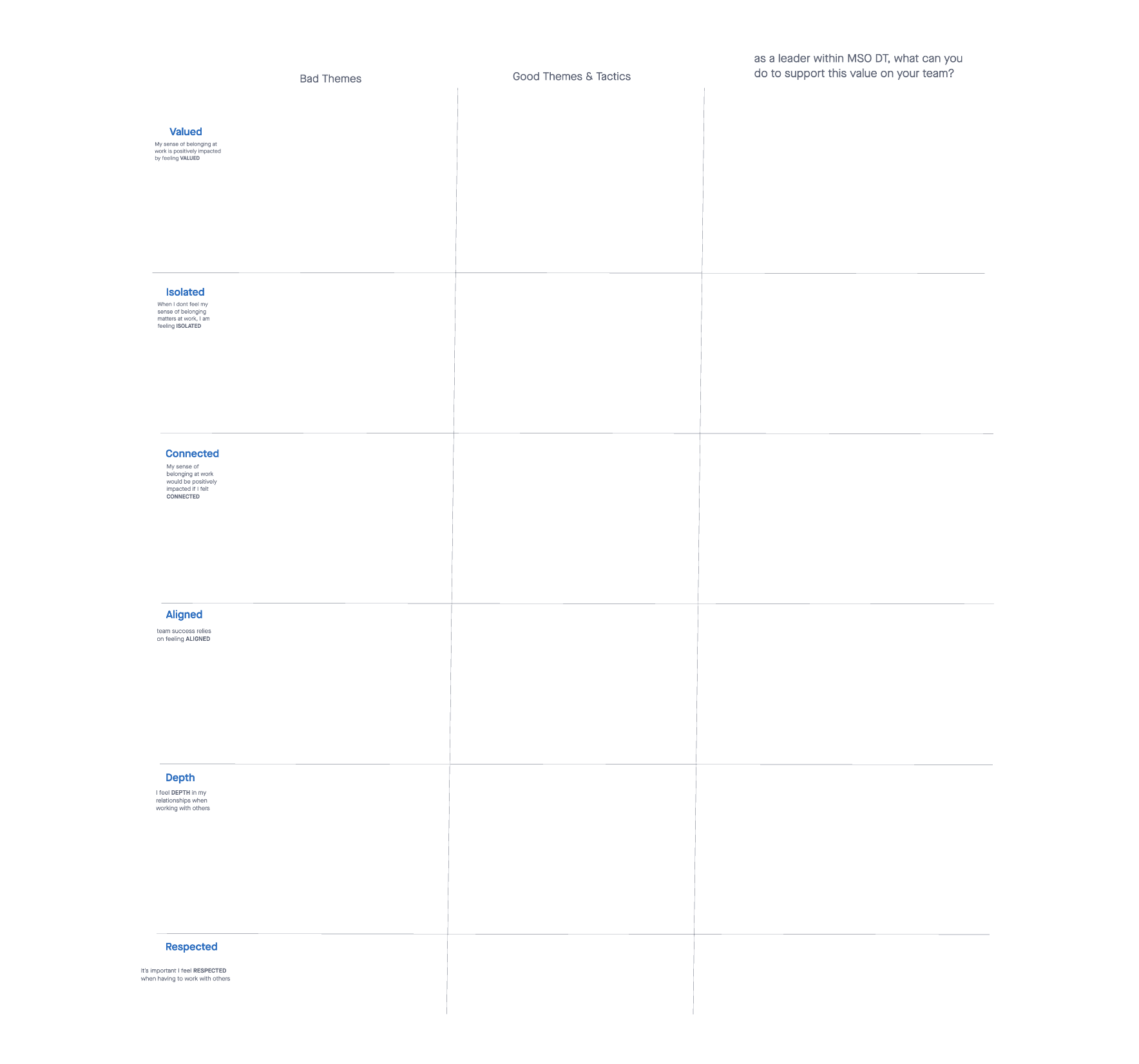
I facilitated a design thinking activity focused on deriving themes and tactics from previous sessions with MSO leadership. The objective was to strategize actions that would ensure the organization meets employee needs effectively. The activity involved identifying both negative and positive themes. Leadership members were tasked with conceptualizing actions to enhance the perceived value, as indicated on the left side of the matrix.
The exercise had a total duration of 20 minutes, during which each participant individually filled out every row. Following the completion, we engaged in a discussion to highlight key points derived from the feedback. The insights gained from this activity were to be leveraged by leadership to inform the creation of an organizational value statement. The created statement would define the desired state and provide support for employee needs based on the identified themes and tactics.
Common Themes:
Inclusivity: Participants highlighted the importance of fostering an inclusive environment where every employee feels valued regardless of their role or background.
Communication: Effective and transparent communication emerged as a key theme, emphasizing the need for clear channels to ensure everyone feels connected and aligned with the organization’s goals.
Tactics for Creating a Valued Workplace:
Recognition and Appreciation: Participants emphasized the need for regular acknowledgment of employees’ efforts and contributions to cultivate a sense of value and appreciation.
Development Opportunities: Creating avenues for professional growth and skill development was identified as a way to demonstrate commitment to employees’ individual success and fulfillment.
Building Connections:
Team Building Activities: Incorporating team-building activities, both formal and informal, was suggested to strengthen interpersonal relationships and foster a sense of community.
Mentorship Programs: Establishing mentorship programs can help employees feel more connected and supported in their personal and professional growth.
Alignment with Organizational Values:
Clarity of Purpose: Participants emphasized the importance of clearly communicating the organization’s mission and values, ensuring that employees understand how their individual contributions align with these broader objectives.
Goal Setting and Tracking: Incorporating mechanisms for setting and tracking individual and team goals can help employees see their progress and alignment with organizational objectives.
Respectful Workplace:
Diversity and Inclusion Initiatives: Incorporating diversity and inclusion initiatives was highlighted to create a workplace where all employees feel respected and valued for their unique perspectives and backgrounds.
Feedback Mechanisms: Establishing effective feedback channels ensures that employees feel heard and valued, contributing to a culture of mutual respect.
Depth in Relationships:
Openness and Vulnerability: Encouraging openness and vulnerability in professional relationships fosters trust and depth in connections among team members.
Social Interactions: Recognizing the importance of social interactions beyond work-related tasks, participants suggested creating spaces for casual conversations to strengthen interpersonal bonds.
The design thinking activity highlighted the importance of a holistic approach to workplace values, emphasizing inclusivity, communication, recognition, and personal growth. By incorporating these insights into the workplace value statement, the organization can create a culture where employees feel valued, connected, aligned, and respected, promoting deep and meaningful relationships within the workforce.